


 Cart
Cart


 <% cart_fragment.free_shipping_message %>free shipping


10 Whole Spices Every Indian Kitchen Should Always Have

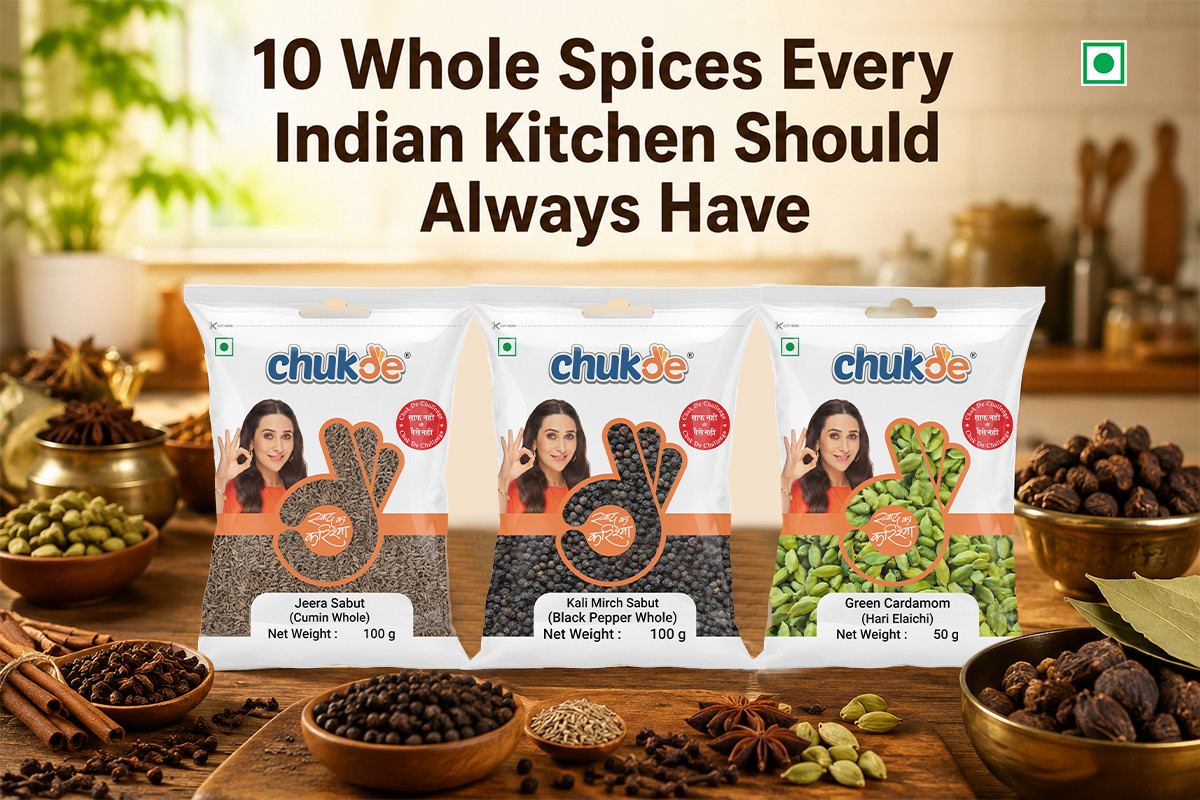
Open any Indian kitchen cupboard and you will usually find a small steel dabba or glass jars filled with whole spices. These are the quiet workers behind every good tadka, every fragrant rice, and every balanced curry. Ground masalas lose their punch faster. Whole spices hold their aroma longer and give you control over when the flavour comes out.
I have cooked daily Indian meals for years — weeknight dals, Sunday biryanis, quick sabzis after office. The difference between a flat dish and one that smells inviting often comes down to how well the whole spices are used and stored. Here are the 10 whole spices I keep stocked at all times, why each matters, and how to use them without overthinking.
1. Cumin Seeds (Jeera)
One of the most commonly used spices in Indian cooking, especially for everyday tadkas. When the oil is hot and you add a teaspoon of jeera, it crackles within seconds and releases a warm, earthy smell that signals the dish has begun.
Use it for dal tadka, jeera rice, simple potato sabzi, or raita. Dry-roast a small batch and grind for fresh powder when needed. In my kitchen I keep a small jar of whole jeera sabut near the stove because it goes into almost every savoury dish.
2. Mustard Seeds (Rai / Sarson)
Essential for South Indian and Bengali cooking, but useful everywhere. Black or brown mustard seeds pop dramatically in hot oil and leave a sharp, nutty note.
Add them first in the tadka for sambhar, rasam, or any coconut-based vegetable. Wait for the seeds to finish popping before adding other ingredients — that is the moment the flavour is fully released. A common mistake is adding them to oil that is not hot enough; they stay bitter and do not crackle. Keep a reliable pack of rai (mustard seeds) ready for daily tempering.
3. Coriander Seeds (Dhania)
Mild, citrusy and slightly sweet. Whole coriander seeds are excellent for tempering or for crushing fresh into marinades and spice mixes.
I use them in fish or chicken marinades and sometimes in pickles. When you roast them lightly, the citrus note becomes clearer. Keep them whole rather than relying only on powder — the aroma stays stronger for longer. Fresh dhania sabut makes a clear difference in flavour layering.
4. Black Peppercorns (Kali Mirch)
Sharp, woody heat that works both in tadka and as a finishing grind. Whole peppercorns go into garam masala blends, rasam, and many slow-cooked gravies.
Freshly cracked pepper tastes brighter than pre-ground. I keep a small pepper mill on the dining table for final adjustments. In monsoon months when digestion feels heavier, a few crushed peppercorns in hot water with jeera is a simple household practice many families still follow. Stock good quality kali mirch sabut for both cooking and finishing.
5. Green Cardamom (Elaichi)
Sweet, floral and cooling. Green cardamom is the quiet star in both chai and biryani. Lightly crush the pods before adding so the seeds release their oils.
Use 2–3 pods for a pot of tea or a small biryani. Remove the pods before serving if you prefer not to bite into them. Black cardamom is stronger and smokier — keep green for daily use and black for special meat or rice dishes. A small jar of green elaichi is enough for weeks of chai and rice.
6. Cinnamon Sticks (Dalchini)
Indian kitchens usually use cassia bark, which is thicker and more robust than the thin Ceylon sticks. It adds warm, woody sweetness to rice, meat curries and chai.
Break a small piece and add it early in the cooking so the flavour has time to infuse. One or two pieces are enough for a family-sized biryani or korma. The stick is easy to fish out before serving. Keep dalchini cinnamon sticks in the pantry for slow-cooked dishes.
7. Cloves (Laung)
Intense, slightly sweet and pungent. A little goes a long way. Cloves appear in most whole garam masala mixes and in slow-cooked dishes.
Two or three cloves are usually enough for a pot of rice or meat. Biting into a whole clove can numb the tongue, so count them when you add and remove them later if needed. Store them tightly — their strong aroma can travel to other spices. A reliable pack of laung (cloves) lasts a long time because you use very little.
8. Bay Leaf (Tej Patta)
Indian bay leaves (tej patta) are different from Mediterranean ones. They carry a mild cinnamon-clove fragrance and work in the background of gravies and pulaos.
Add one or two leaves early. They are leathery, so remove them before serving. Many home cooks forget them, yet the dish feels flatter without that subtle layer. Keep tej patta in a small airtight jar.
9. Fennel Seeds (Saunf)
Sweet, liquorice-like and cooling. Fennel is common in Gujarati and Rajasthani cooking and also works as a simple after-meal muncher.
Use a small pinch in tadka for certain dals or vegetable preparations. Lightly roasted fennel with a pinch of sugar makes a quick homemade mouth freshener. The seeds stay fragrant for a long time when kept whole. A pack of barik saunf covers both cooking and the after-meal habit.
10. Fenugreek Seeds (Methi Dana)
Bitter when raw, but nutty and complex once tempered or lightly roasted. Fenugreek seeds are key in many pickles, some dals, and in the classic five-spice mix of eastern India (panch phoran).
Use sparingly — half a teaspoon is often enough. Overuse makes the dish bitter. In my experience, toasting them briefly before grinding softens the bitterness and improves the final taste. Keep methi dana for pickles and regional temperings.
Quick Storage Checklist for Whole Spices
- Keep in airtight glass or steel jars
- Store away from the stove and direct sunlight
- Use dry spoons only
- Label jars with the month of purchase
- Whole spices generally keep good aroma for 2–3 years if stored properly; ground versions fade much faster
- Buy smaller quantities of the ones you use less often
Moisture and heat are the main enemies. In humid months I check the jars more often and transfer any spice that feels damp. For more on spice handling and quality standards, refer to guidance from the Spices Board of India.
Common Mistakes and Simple Fixes
Adding whole spices to oil that is not hot enough leaves them raw and bitter. Wait for the oil to shimmer. Over-roasting turns them acrid — keep the flame medium and stay near the kadhai. Using old, faded spices forces you to add more quantity, which throws the balance off. When the aroma no longer rises clearly on heating, it is time to replace.
Whole spices also give better flavour layering. You can temper some at the start and grind a few fresh for the end. That combination is hard to match with only pre-ground powders.
Why These Ten Cover Most Everyday Cooking
With these ten you can make dal tadka, simple vegetable sabzis, plain or jeera rice, basic chicken or mutton curries, sambhar-style preparations, chai, and most regional temperings. Regional preferences exist — South Indian kitchens may lean heavier on mustard and curry leaves, while North Indian ones use more cumin and garam masala spices — but the core list remains useful across the country.
India continues to be a major producer and consumer of spices. Recent production data from government sources shows the scale of the domestic spice economy. Keeping a well-organised set of whole spices supports both everyday cooking and the growing interest in home-cooked regional dishes that many families are returning to. For official production and quality information, see the Directorate of Arecanut and Spices Development updates.
Start with the ones you use most — jeera, rai, and kali mirch — then gradually fill the rest. Taste improves when the spices are fresh and handled with a bit of attention.
Final Thoughts
These 10 whole spices form the practical backbone of an Indian kitchen. They last longer than powders, release aroma exactly when you need it, and give you better control over flavour. Keep them cool, dark and airtight, use them with attention to timing, and your daily cooking will smell and taste better.
Explore the whole spice range on the Chukde whole spices collection, try a simple tadka tonight with two or three of these, and notice the difference in aroma. Share your own kitchen observations in the comments — what whole spice do you never run out of?
Frequently Asked Questions
Which whole spices are must-haves for an Indian kitchen?
Cumin seeds, mustard seeds, coriander seeds, black peppercorns, green cardamom, cinnamon sticks, cloves, bay leaves, fennel seeds and fenugreek seeds cover most everyday cooking needs.
How long do whole spices last?
When stored in airtight containers away from heat, light and moisture, most whole spices keep good aroma for 1 year. Ground spices lose potency much faster.
Should I remove whole spices before serving?
Larger pieces like cinnamon sticks, bay leaves, cloves and cardamom pods are usually removed. Smaller seeds such as cumin and mustard are left in and eaten.
Whole spices or ground – which is better?
Whole spices hold aroma longer and let you control the exact moment flavour is released. Grind small batches fresh when a recipe needs powder.
What is the best way to store whole spices in an Indian kitchen?
Use airtight glass or steel jars, keep them in a cool dark cupboard away from the stove, and always scoop with a dry spoon.
Related articles
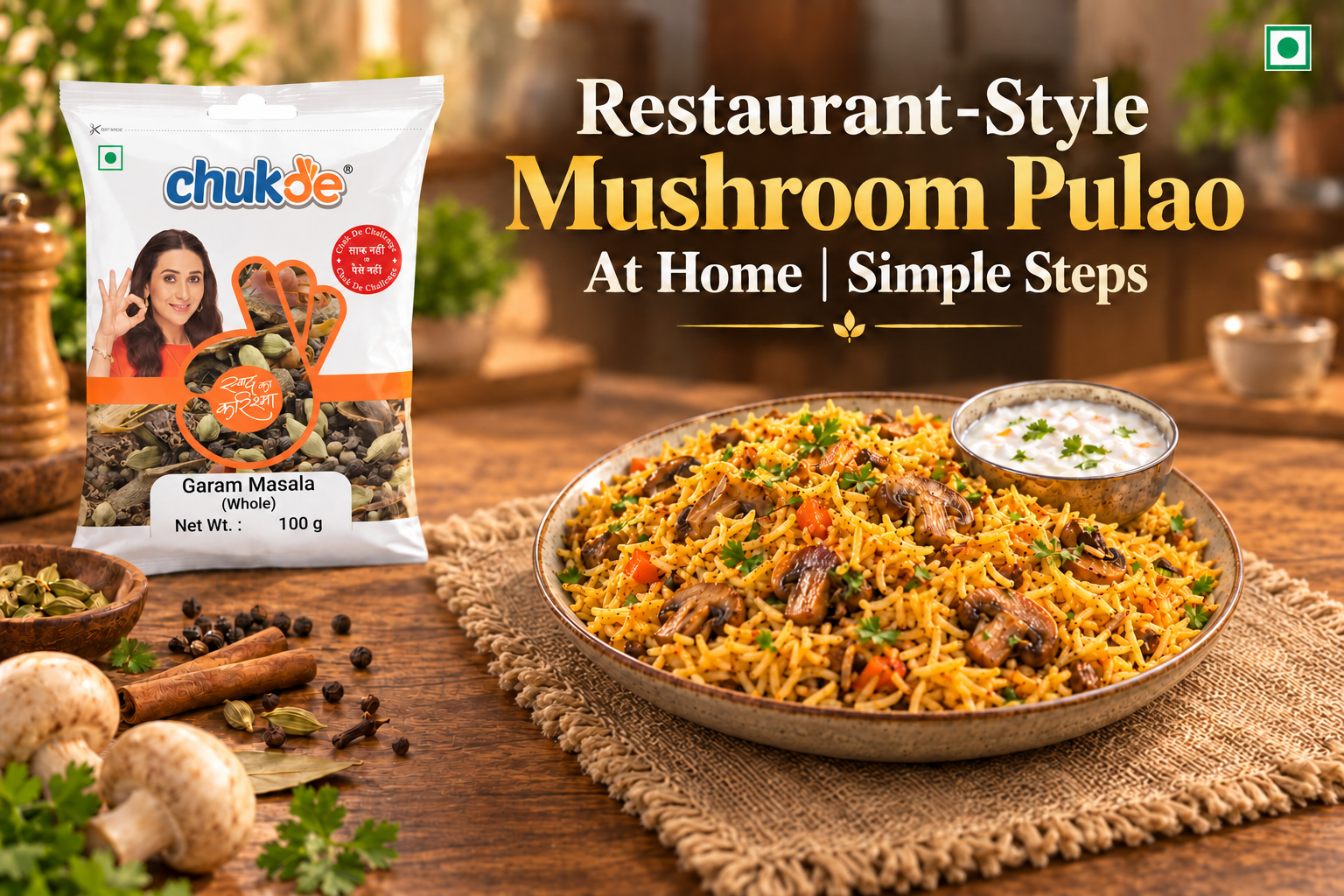
Make restaurant-style mushroom pulao at home with fluffy basmati rice, mushrooms and whole spices. Follow easy steps for a tasty one-pot lunch or dinner.

Make crispy soya cheese balls at home with soya chunks and Chukde Kashmiri red chilli powder. Easy evening snack with coating tips and flavour balance.
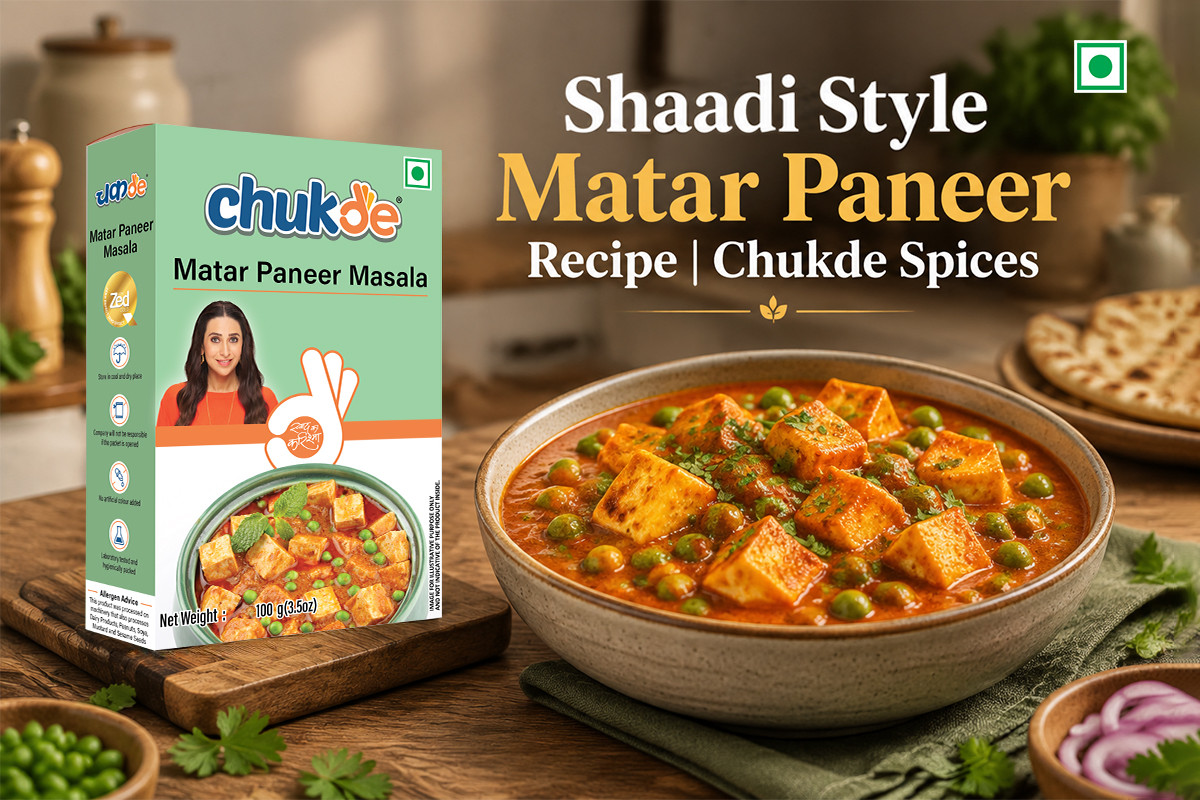
Learn how to make Shaadi Style Matar Paneer with creamy gravy, soft paneer and rich flavours. Easy wedding style recipe with Chukde Matar Paneer Masala.
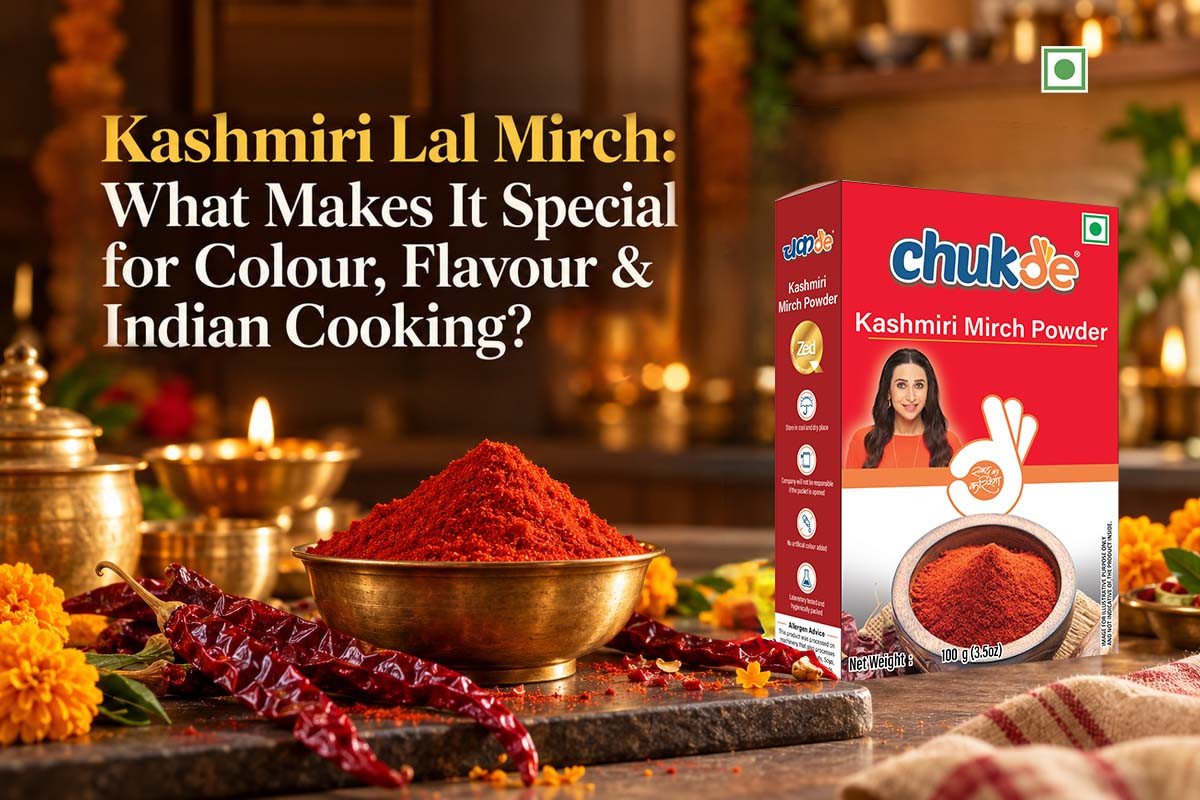
Discover why Kashmiri Lal Mirch adds rich colour with mild heat. Learn its benefits, cooking uses, storage tips and difference from regular chilli.
<% quickViewcurrVar.entity.title %> (<% quickViewcurrVar.price.off %>)
<% formatCurr(quickViewcurrVar.price.regular, quickViewcurrVar.price.curr_info) %> <% formatCurr(quickViewcurrVar.price.sale, quickViewcurrVar.price.curr_info) %> (Inc. tax) (Ex. tax)
Description (SKU - <% quickViewcurrVar.sku %>)
 TBS points:
 Tags & Categories:

Powered by Science

100% cruelty free

Made in India
 100% safe
checkout
100% safe
checkout

Invalid Product!


Checkout in
& get 2% OFF