


 Cart


 <% cart_fragment.free_shipping_message %>free shipping


Sabut Garam Masala: Benefits, Uses & Storage Guide

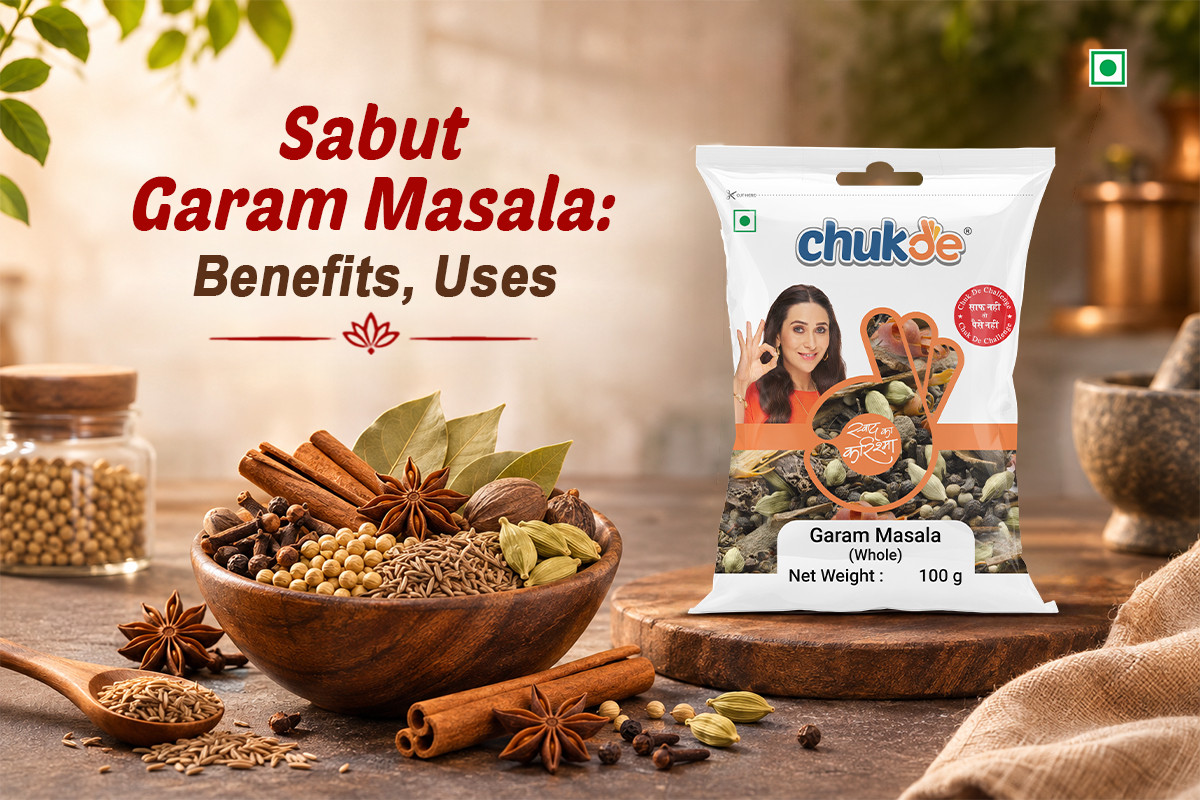
Many home cooks open a packet of ready garam masala powder and wonder why the final dish still feels flat. The missing piece is often the whole form. Sabut garam masala (also called whole garam masala or khada garam masala) keeps the spices intact until the moment heat releases their aroma. This guide explains the benefits and the correct way to use it in everyday cooking.
What Exactly Is Sabut Garam Masala?
Sabut garam masala is a collection of whole spices used at the start of cooking. Common spices include cumin seeds, coriander seeds, green and black cardamom, cinnamon sticks, cloves, black peppercorns, and bay leaves. Some cooks add star anise or mace according to regional preference.
Unlike ground powder, which is usually added near the end, these whole spices go into hot oil or ghee first. The heat opens the volatile oils and builds the base flavour of the dish.
Benefits of Using Whole Spices
From practical kitchen observations, keeping spices whole offers clear advantages:
- Aroma stays stronger for longer because the oils remain protected until heated.
- You control the intensity by choosing which spices and how many pieces to add.
- The same jar works for tempering across many recipes.
- Leftover whole pieces can be removed before serving if preferred.
Whole spices also support better pantry organisation. One airtight jar of mixed whole spices covers many recipes without opening multiple powder boxes every day.
How to Use Sabut Garam Masala in Daily Cooking
The most common method is tempering (tadka).
- Heat oil or ghee on medium-low heat.
- Add the whole spices (usually 1 small cinnamon stick, 2–3 cloves, 2 green cardamoms, 1 bay leaf, and a few peppercorns for 4 servings). You can use ready Chukde Garam Masala Sabut for convenience.
- Let them sizzle for 15–30 seconds until fragrant. Do not let them turn dark or bitter.
- Immediately add onions, ginger-garlic, or the main ingredients of the recipe.
This method works well for dal, sabzi, pulao, and many curries. For biryani or slow-cooked gravies, the same spices can stay in the pot throughout cooking. Remove large pieces such as cinnamon bark or bay leaves before serving if desired.
Whole vs Ground: Quick Comparison
|
Aspect |
Sabut (Whole) Form |
Ground Powder Form |
|
When to add |
Beginning (tempering) |
Near the end |
|
Flavour character |
Deep base aroma |
Final warm lift |
|
Control |
Easy to adjust pieces |
Fixed strength once ground |
|
Shelf life |
Longer when stored whole |
Shorter once powdered |
|
Best for |
Tadka, rice, slow curries |
Finishing gravies and dry dishes |
Both forms have their place. Many experienced cooks keep both in the kitchen.
Storage Checklist
- Use airtight glass or steel containers.
- Keep away from the gas stove and window sunlight.
- Label the jar with the date.
- Check for moisture every few weeks.
- Whole spices generally hold aroma longer than powder when stored correctly.
Practical Tips from the Kitchen
- Start with fewer pieces. You can always add more next time.
- Burnt spices turn bitter quickly — keep the flame medium-low.
- For mild dishes, reduce cloves and black cardamom.
- For richer gravies, a small piece of mace adds depth.
Frequently Asked Questions
What is the difference between sabut garam masala and regular garam masala powder?
Sabut garam masala uses whole spices added at the beginning for base aroma. Powder is usually added near the end for a finishing touch.
Can I use sabut garam masala instead of powder?
Yes, but the method changes. Use whole spices early in the cooking process through tempering rather than sprinkling at the end.
How should I store sabut garam masala?
Store it in an airtight container away from heat and moisture. Whole spices hold their aroma longer than powder when kept correctly.
Which dishes benefit most from whole garam masala?
Dal, pulao, biryani, rajma, chole, and most slow-cooked curries gain deeper flavour when whole spices are tempered at the start.
Conclusion
Sabut garam masala gives home cooks a simple way to build deeper aroma through proper tempering and controlled spice selection. The key is timing and gentle heat. Try using whole spices this week in a dal or pulao and notice the difference in the finished dish. Explore more whole spice options on the Chukde website to expand your everyday cooking repertoire.
Related articles
Explore phool makhana benefits, nutrition, roasting tips and easy recipes. Learn how to make crispy masala makhana, sweet makhana and more at home.

Make creamy fruit chia seeds pudding with milk, yogurt and berries. Prep it the night before for an easy, spoonable breakfast.

Discover hing benefits, traditional uses and cooking tips. how asafoetida supports flavour in Indian dishes, also use it in tadka and store it properly.
Discover how to use Kashmiri Lal Mirch Powder for rich colour and balanced heat. Learn what to check before buying and how to store it for freshness.
<% quickViewcurrVar.entity.title %> (<% quickViewcurrVar.price.off %>)
<% formatCurr(quickViewcurrVar.price.regular, quickViewcurrVar.price.curr_info) %> <% formatCurr(quickViewcurrVar.price.sale, quickViewcurrVar.price.curr_info) %> (Inc. tax) (Ex. tax)
Description (SKU - <% quickViewcurrVar.sku %>)
 TBS points:
Tags & Categories:

Powered by Science

100% cruelty free

Made in India
 100% safe
checkout

Invalid Product!


Checkout in
& get 2% OFF