


 Cart
Cart


 <% cart_fragment.free_shipping_message %>free shipping


Chukde Quality Check: How To Judge Fresh Whole Spices At Home

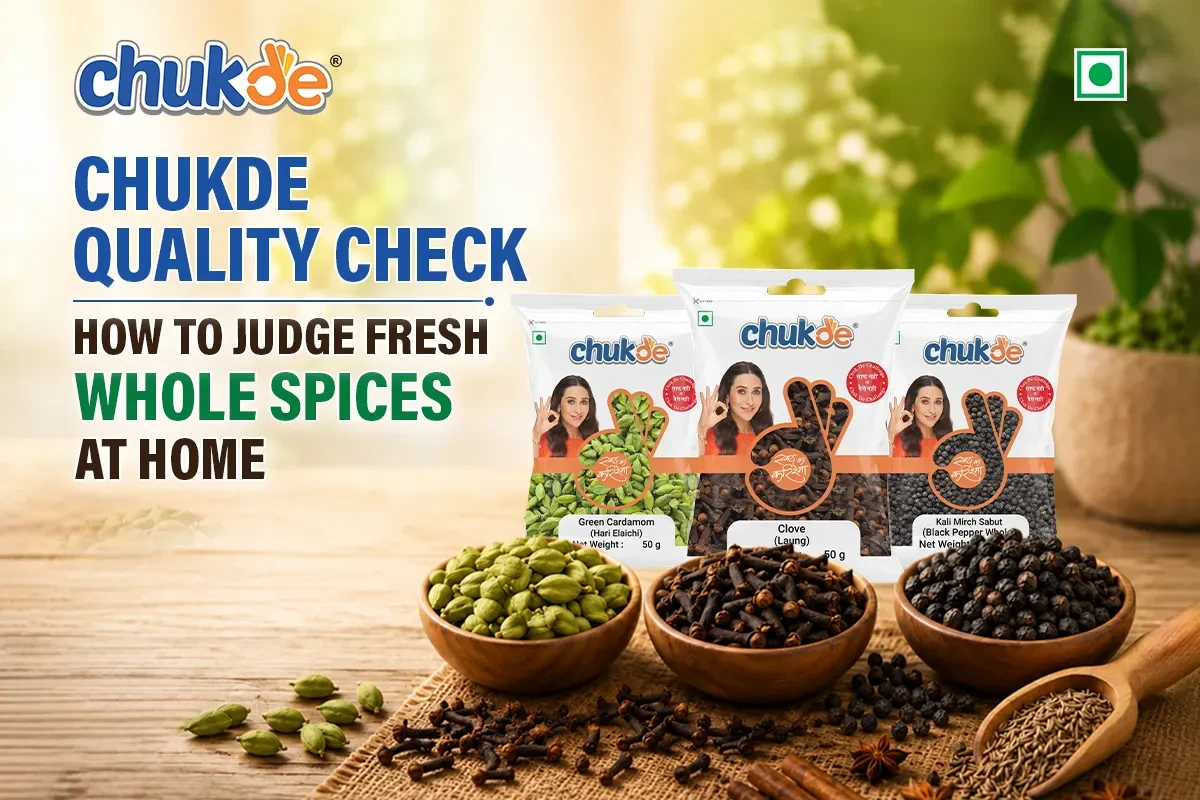
Ever made a biryani, dal, or sabzi that looked perfect but somehow smelled dull? The recipe may not be the problem. Sometimes, the real reason is sitting quietly in your spice box.
Fresh whole spices play a big role in everyday cooking. Their aroma, colour, dryness, and natural oil content decide how much flavour they bring to your food. When spices are fresh, even a simple tadka smells rich and inviting. But when they sit in the kitchen for too long or are not stored properly, the same dish can lose its charm.
In most Indian homes, spices are often bought in slightly larger quantities and used slowly over months. Between daily cooking, repeated opening of jars, and exposure to heat or moisture, many spices start losing freshness without anyone noticing.
The good part is that you do not need any special equipment to check them. A few simple home checks can help you understand whether your whole spices are still fresh and flavourful.
Why Fresh Whole Spices Matter
Whole spices usually hold their natural oils for longer than powdered spices. These oils are what give spices their aroma and flavour during cooking.
That is why spices like cumin, black pepper, cloves, cardamom, fennel, coriander, and cinnamon are commonly used in dishes such as biryani, pulao, dal, chai, gravies, and homemade masala blends. If readers want to explore more options, they can check Chukde's whole spices range.
Fresh whole spices do more than add flavour. They create the first impression of the dish through aroma. Often, the smell coming from the kitchen is what makes food feel comforting even before the first bite.
The Aroma and Rub Test
The easiest way to check fresh whole spices at home is through smell.
Take a small quantity in your palm and smell it closely. Fresh spices should have a clear and noticeable natural aroma. Cumin should smell earthy and warm, black pepper should smell sharp, cardamom should smell sweet and aromatic, cloves should smell warm and strong, and fennel should smell fresh with a slightly sweet note.
If the smell feels weak, dusty, or flat, the spice may be old or stored poorly.
A useful trick followed in many kitchens is the rub test. Lightly crush one piece of spice and rub it between your fingers. If the aroma becomes stronger immediately, the spice still has good natural oil content.
This works especially well for cumin, black pepper, cardamom, cinnamon, cloves, and fennel. For a broader buying perspective, Chukde also has a helpful guide to buying whole spices online.
Check Colour, Shape, and Fullness
Good whole spices should look natural and well-formed. They should not appear too faded, overly polished, or damaged.
We have all seen spices that look suspiciously shiny or too bright to feel natural. That kind of appearance is not always a good sign. Fresh whole spices usually have a balanced colour and a clean, consistent look.
For example, fennel should have a fresh greenish tone, coriander seeds should look clean and light brown, black pepper should appear bold and dark, cardamom should look plump instead of flat, and cloves should feel firm and complete.
Avoid spices that look too pale, damp, shrivelled, heavily broken, or discoloured. The shape and fullness of spices matter because mature, properly selected spices generally hold better aroma and flavour. For seasonal buying habits, readers can also refer to Chukde's seasonal guide to buying whole spices.
Dryness Tells You a Lot
Moisture is one of the biggest reasons spices lose quality over time.
When whole spices absorb moisture from the air, they slowly lose aroma and texture. In humid weather, this can happen faster than expected, especially when jars are opened frequently or stored near the stove.
Fresh whole spices should feel dry and crisp. Bay leaves should feel dry, cinnamon should not feel rubbery, cloves should feel firm, and cumin or coriander should not feel sticky.
Many people unknowingly store spices near the stove or sink, where heat and steam affect freshness faster. Even good spices can lose their aroma if exposed to moisture regularly.
Look for Cleanliness and Storage Damage
Before using whole spices, take a quick look inside the jar or packet. Fresh whole spices should appear clean and well-sorted, without dust, stones, stems, husk, broken waste, powdery residue, tiny holes, web-like texture, or damaged seeds.
Sometimes spices may look normal at first glance, but close inspection can reveal storage damage caused by humidity or long storage periods. A clean spice not only cooks better but also feels better to use in daily cooking.
Packaging and Home Storage Matter
Packaging plays an important role in keeping fresh whole spices protected from air, sunlight, and moisture.
Before buying, check the packet seal, manufacturing date, best before date, storage instructions, and any leakage or packet damage. Avoid packets that are loose, torn, or not sealed properly.
Once opened at home, store whole spices in airtight containers and keep them in a cool, dry place. For general food storage guidance, the FoodSafety.gov FoodKeeper resource can be a useful reference.
Also, avoid grinding large quantities at once. Whole spices generally stay fresh for longer in their original form, and Chukde's blog on grinding your own spices at home explains why small-batch grinding can help maintain better aroma.
For readers who want a simple background on spices and their culinary use, Britannica's overview of spices is a useful external reference.
A Simple Home Checklist
|
Check |
What to Look For |
|
Aroma |
Strong, natural smell |
|
Colour |
Natural and clean appearance |
|
Texture |
Dry and crisp |
|
Shape |
Full and firm |
|
Cleanliness |
No dust or waste |
|
Packaging |
Properly sealed |
|
Storage |
Cool and dry place |
Why Many Home Cooks Prefer Chukde Whole Spices
At Chukde, the focus is on carefully selected, cleaned, and quality-checked whole spices that fit naturally into everyday cooking.
From sourcing to sorting and packing, attention is given to maintaining the aroma, appearance, and flavour of the spices so they reach kitchens in good condition.
Whether it is cumin for tadka, cardamom for chai, or black pepper for daily cooking, the goal is simple: spices should smell fresh, look clean, and add flavour to food consistently.
Conclusion
Judging fresh whole spices at home is easier than most people think. A quick check of aroma, colour, dryness, shape, cleanliness, and storage can tell you a lot about the quality sitting in your kitchen.
Fresh whole spices can completely change the aroma and flavour of everyday cooking. And sometimes, the reason your biryani feels dull is not the recipe at all. It is the spice box asking for a quality check.
FAQs
How can I check fresh whole spices at home?
Check their aroma, colour, dryness, size, and cleanliness. Fresh whole spices usually smell strong and feel dry.
Why do whole spices smell stronger than powdered spices?
Whole spices usually retain their natural oils for longer, which helps preserve aroma and flavour.
How should I store whole spices?
Store them in airtight containers away from sunlight, heat, and moisture.
Do whole spices lose flavour over time?
Yes, whole spices can gradually lose aroma and flavour if exposed to air, moisture, or heat for long periods.
What are signs of poor-quality whole spices?
Weak smell, faded colour, damp texture, insect damage, broken pieces, and unusual odour are common signs.
Is it better to buy whole spices or powdered spices?
Whole spices generally stay fresh for longer because their natural oils remain protected until crushed or ground.
Can I grind whole spices at home?
Yes, grinding whole spices in small quantities can help maintain better aroma and flavour.
What is the best way to keep spices fresh for longer?
Keep them in airtight containers, avoid moisture, and store them in a cool, dry place.
Related articles
Learn kesar benefits, kitchen uses, bloom method, food amounts, and home tests to spot quality saffron threads.
Make soft, delicious no-cook coconut modaks in just 10 minutes using simple ingredients. An easy festive sweet perfect for Ganesh Chaturthi celebrations.

Make soft, flavourful Besan Mawa Modak for Ganesh Chaturthi with an easy step-by-step recipe, perfect for bhog, prasad and festive celebrations at home.

Flax seeds are back in Indian kitchens. See why demand is rising, useful food points, roast-and-grind steps, storage tips and easy daily uses.
<% quickViewcurrVar.entity.title %> (<% quickViewcurrVar.price.off %>)
<% formatCurr(quickViewcurrVar.price.regular, quickViewcurrVar.price.curr_info) %> <% formatCurr(quickViewcurrVar.price.sale, quickViewcurrVar.price.curr_info) %> (Inc. tax) (Ex. tax)
Description (SKU - <% quickViewcurrVar.sku %>)
 TBS points:
 Tags & Categories:

Powered by Science

100% cruelty free

Made in India
 100% safe
checkout
100% safe
checkout

Invalid Product!


Checkout in
& get 2% OFF