


 Cart
Cart


 <% cart_fragment.free_shipping_message %>free shipping


Tej Patta Uses: Indian Bay Leaf Cooking Guide

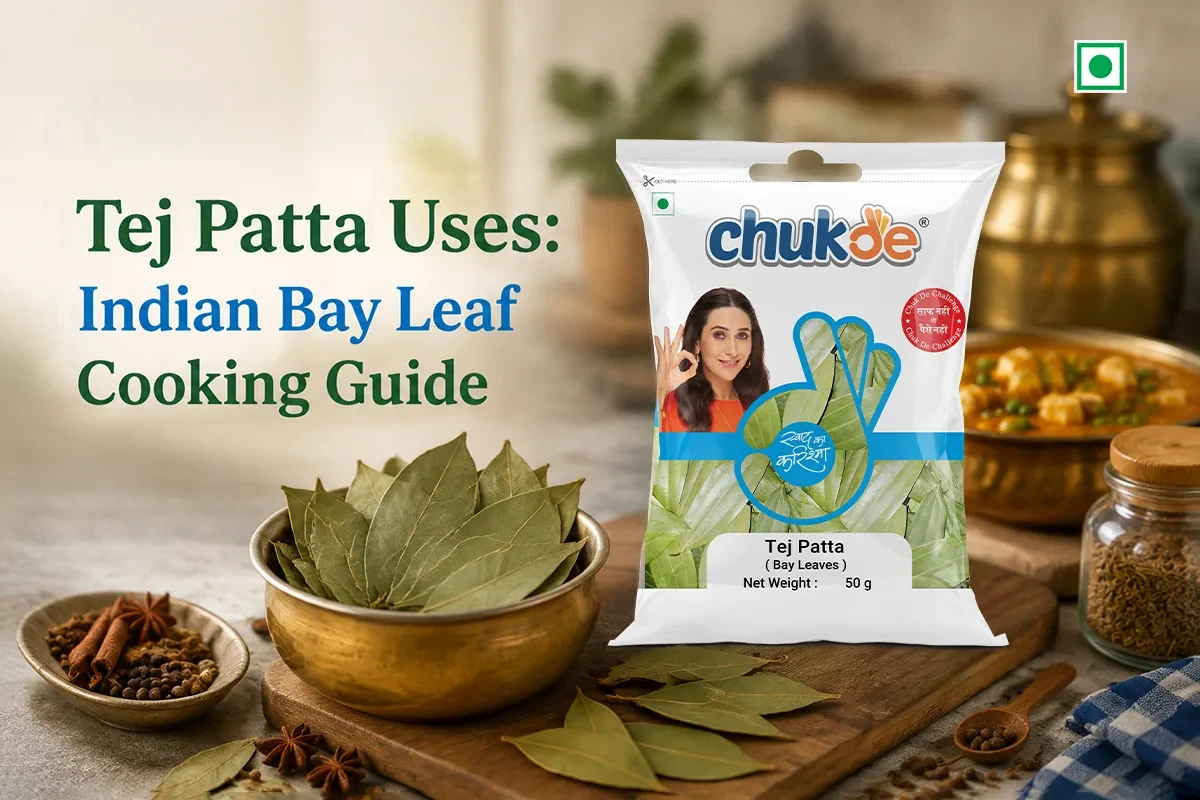
That dried leaf floating in your biryani or dal is doing real work. Tej patta, also called Indian bay leaf, quietly builds aroma in many home-cooked Indian dishes. Most people remove it and never think twice. This guide shows practical tej patta uses so you get consistent flavour every time.
Tej patta comes from the Cinnamomum tamala tree. It belongs to the same family as cinnamon and carries a warm, slightly sweet note with a light clove character. Indian kitchens almost always use the dried whole leaf. The leaf works best when added early so its volatile oils can release slowly into the dish.
You can start with good quality whole leaves from Chukde Spices Tej Patta 50g. Keep a small pack in your spice box and use it regularly.
What Is Tej Patta?
Tej patta is a whole spice. Fresh leaves start olive green and turn tan or light brown when dried properly. Look for three clear parallel veins running the full length of the leaf. That vein pattern is the easiest way to tell it apart from the Mediterranean bay leaf (Laurus nobilis), which has only one main central vein.
In my kitchen tests I have found that the Indian leaf gives a softer, cinnamon-leaning background note. The Mediterranean version leans more herbal. For biryani, dal, or any north Indian-style masala, always choose tej patta.
Tej Patta vs Mediterranean Bay Leaf
|
Feature |
Tej Patta (Indian Bay Leaf) |
Mediterranean Bay Leaf |
|
Botanical Name |
Cinnamomum tamala |
Laurus nobilis |
|
Veins |
Three parallel veins |
One central vein |
|
Aroma |
Warm, cinnamon-clove |
Herbal, slightly floral |
|
Best Indian Use |
Biryani, dal, garam masala |
Rarely used in Indian food |
Using the wrong leaf changes the final taste. Stick to tej patta for Indian recipes.
How to Identify Quality Tej Patta
Hold the leaf up to light. You will see three parallel veins. Quality leaves are olive-tan, not grey or dusty. Crush a small piece between your fingers. Good tej patta releases a clear cinnamon-clove warmth. If the leaf feels crumbly or has almost no smell, replace it. Avoid packets that feel damp or smell musty.
For consistent quality, many home cooks keep Chukde Spices Tej Patta 50g in their regular spice rotation.
How to Use Tej Patta in Everyday Cooking
The single most useful technique is blooming. Heat oil or ghee, add the leaf first, and let it sizzle for 15–20 seconds before onions or other ingredients go in. You will see tiny bubbles around the edges. That is the aroma releasing.
Quantity Table
|
Dish |
Leaves (3–4 servings) |
Method |
|
Biryani / Pulao |
1–2 |
Bloom in hot fat before onions |
|
Dal Tadka |
1 |
Add to tempering with cumin |
|
Rajma / Chole |
1 |
Add to pot or pressure cooker |
|
Garam Masala (batch) |
2–3 |
Dry roast then grind |
|
Simple Rice / Khichdi |
1 |
Add while rice cooks in water |
Regional Notes
North Indian dishes use tej patta more heavily for deep aroma in biryani and rich gravies. In some Kashmiri preparations it appears in wazwan-style cooking. South Indian recipes use it less often but it works well in certain rice dishes and lentil preparations when you want a gentle warm note.
Step-by-Step Blooming Technique
- Heat 1–2 tablespoons ghee or oil in the pan.
- Add 1–2 whole tej patta leaves.
- Wait 15–20 seconds until you see tiny bubbles.
- Add onions or other ingredients.
- Continue cooking as per recipe.
- Remove leaves before serving.
Whole Leaf vs Powder – Which Should You Buy?
Most home cooks should buy whole tej patta leaves. They hold their aroma for 6–12 months and work beautifully in slow-cooked dishes. Powdered tej patta is convenient for dry rubs and last-minute flavour adjustments, but it is stronger (use only ¼ teaspoon vs 1 whole leaf) and loses aroma faster, usually within 4–6 months. If you grind your own powder, do so in small batches and store it in a dark glass jar away from heat. For most home kitchens, keeping both forms makes sense: whole leaves for everyday slow cooking, powder for quick dishes. Start with Chukde Spices Tej Patta 50g for reliable whole leaves.
Practical Storage Checklist
- Use an airtight container.
- Keep in a cool, dark cupboard away from the stove.
- Protect from moisture.
- Check aroma every few months by crushing one leaf.
- Whole leaves last longer than powder.
- Replace when smell becomes weak.
Simple Recipes with Tej Patta
Basic Dal Tadka
Heat one tablespoon ghee in a small pan. Add one whole tej patta, half teaspoon jeera sabut and one dried red chilli. Let the spices crackle for about 30 seconds. Pour the tempering over cooked moong or masoor dal. Squeeze a little lemon on top and serve with rice. The leaf quietly ties the bowl together with warm aroma.
Quick Rajma Tip
Add one tej patta leaf when you start cooking the beans in the pressure cooker. The long cooking time lets the flavour integrate fully into the gravy. Remove the leaf before serving.
Biryani Base
For biryani or pulao, bloom 1–2 tej patta leaves with laung (clove), green elaichi and a small piece of cinnamon before adding onions. This builds the classic aromatic base that later layers with rice.
Final Takeaway
Tej patta works best as a background player. It supports other spices rather than dominating them. Once you start blooming it correctly and removing it before serving, you will notice the difference in everyday dishes.
Keep both whole leaves and a small jar of freshly ground powder in your spice box. The whole form handles slow cooking. The powder works well in dry rubs or last-minute adjustments. With these simple habits, tej patta uses become second nature in your kitchen.
Ready to try? Pick up Chukde Spices Tej Patta 50g and pair it with other whole spices from the Chukde range for better flavour layering in your next biryani or dal.
Related Whole Spices from Chukde
- Tej Patta 50g – Core product for this guide
- Jeera Sabut – Essential for tadka
- Laung Clove – Classic biryani partner
- Green Elaichi – Warm aromatic for rice dishes
- Garam Masala Sabut – Whole spice blend that often includes tej patta
- Cassia Bark Taj 50g – Related cinnamon-family bark
Frequently Asked Questions
Is tej patta the same as bay leaf?
No. Tej patta is Cinnamomum tamala with cinnamon-clove notes and three parallel veins. Mediterranean bay leaf is Laurus nobilis with a more herbal aroma and one central vein.
How many tej patta leaves should I use?
For most home dishes serving 3–4 people, use 1–2 whole leaves. Start with one leaf if you are new to the spice.
Should I remove tej patta before serving?
Yes. The leaf stays tough and fibrous. Always remove it before plating.
Whole leaf or powder – which is better?
Whole leaves for slow cooking and longer shelf life. Powder for quick dry rubs but use less and replace more often.
How long does tej patta stay good?
Whole leaves keep good aroma for 6–12 months in an airtight container away from heat and light.
Useful References
- Botanical information: Cinnamomum tamala – Wikipedia
- Traditional uses and recipes: Uses of Bay Leaf, Tejpatta – Tarla Dalal
Related articles
Learn kesar benefits, kitchen uses, bloom method, food amounts, and home tests to spot quality saffron threads.
Make soft, delicious no-cook coconut modaks in just 10 minutes using simple ingredients. An easy festive sweet perfect for Ganesh Chaturthi celebrations.

Make soft, flavourful Besan Mawa Modak for Ganesh Chaturthi with an easy step-by-step recipe, perfect for bhog, prasad and festive celebrations at home.

Flax seeds are back in Indian kitchens. See why demand is rising, useful food points, roast-and-grind steps, storage tips and easy daily uses.
<% quickViewcurrVar.entity.title %> (<% quickViewcurrVar.price.off %>)
<% formatCurr(quickViewcurrVar.price.regular, quickViewcurrVar.price.curr_info) %> <% formatCurr(quickViewcurrVar.price.sale, quickViewcurrVar.price.curr_info) %> (Inc. tax) (Ex. tax)
Description (SKU - <% quickViewcurrVar.sku %>)
 TBS points:
 Tags & Categories:

Powered by Science

100% cruelty free

Made in India
 100% safe
checkout
100% safe
checkout

Invalid Product!


Checkout in
& get 2% OFF